ISS crew back to normal after emergency shelter order

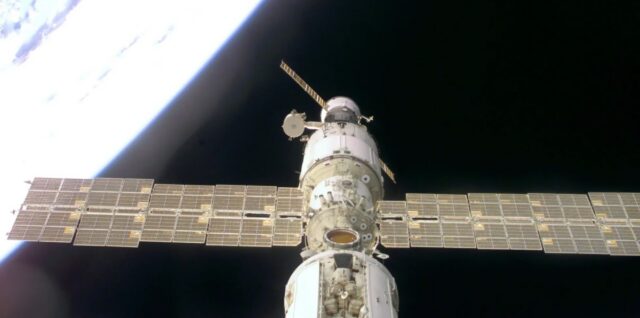
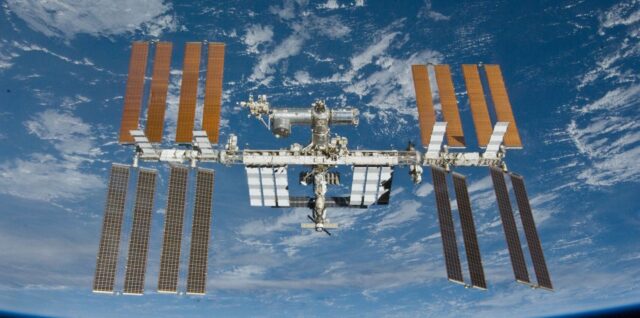
NASA has told crew aboard the International Space Station (ISS) to resume normal operations, ending a roughly two-hour period in which five astronauts sheltered inside a docked SpaceX capsule. The shelter order came Friday morning as a precautionary measure to protect crew while Russian cosmonauts attempted a fix on the Zvezda service module’s transfer tunnelContinue reading “ISS crew back to normal after emergency shelter order” The post ISS crew back to normal after emergency shelter Continue ReadingISS crew back to normal after emergency shelter order

How NASA plans to build a Moon Base

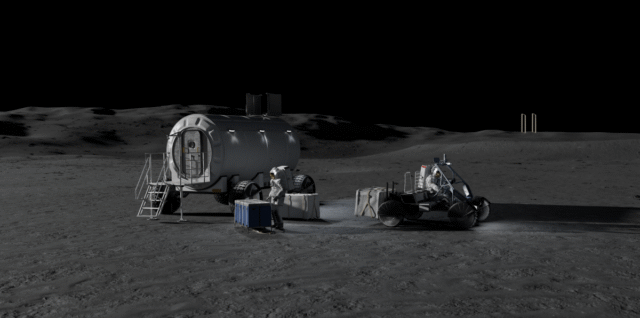
NASA announced new contracts for the rovers and landers that will lay the groundwork for the agency’s proposed $30-billion Moon Base — some of which they plan to launch as soon as this fall — during a May 26 press conference. The announcement offered the most detailed look yet into the Moon Base plan NASAContinue reading “How NASA plans to build a Moon Base” The post How NASA plans to build a Moon Base appeared Continue ReadingHow NASA plans to build a Moon Base

Webb unveils young stars across every stage of formation

For this NASA/ESA/CSA James Webb Space Telescope Picture of the Month, we return to the constellation Orion (the Hunter), a location familiar to Webb. This area of the sky is replete with star-forming clouds that make up a complex hundreds of light-years across. We find ourselves in the giant molecular cloud Orion A, of which the familiar Orion Nebula (also known as M42) is just a part; Webb has taken both close-up and wide-angle looks at M42 before.

NASA crew briefly shelters inside Dragon capsule as Russia addresses new space station leaks

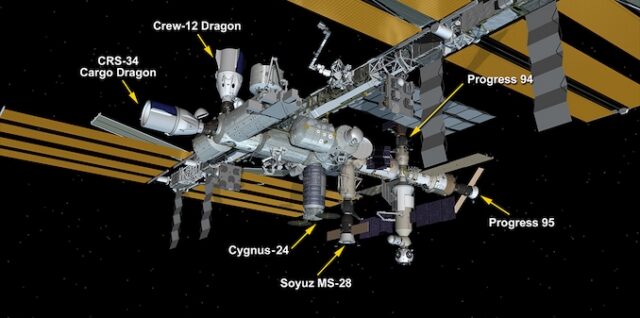
A computer rendering of the configuration of the International Space Station as of May 17, 2026. Six spaceships are parked at the space station including the SpaceX CRS-34 Dragon, the SpaceX Crew-12 Dragon, Northrop Grumman’s Cygnus XL, the Soyuz MS-28 crew ship, and the Progress 94 and 95 resupply ships. Graphic: NASA Previously unannounced repair work to stop new leaks onboard the International Space Station temporarily caused NASA to send all four members of the Continue ReadingNASA crew briefly shelters inside Dragon capsule as Russia addresses new space station leaks

Could it be aliens? From Cheyava Falls on Mars to exoplanet K2‑18b—here’s what scientists really think

It may seem like we are on the verge of discovering alien life. In 2025, a press release stated that we have the “strongest hints yet” of extraterrestrial life on the exoplanet K2-18b. And when talking about a collected sample from a rock named “Cheyava Falls” on Mars, NASA Administrator Sean Duffy said this was the “closest we have ever come” to discovering life on the red planet.

Astronauts on International Space Station take shelter in SpaceX Dragon as cosmonauts try to fix air leak

ISS astronauts briefly sheltered aboard an attached SpaceX Dragon capsule today (June 5) while cosmonauts tried to fix a persistent leak on the Russian side of the orbiting lab. Continue ReadingAstronauts on International Space Station take shelter in SpaceX Dragon as cosmonauts try to fix air leak

Safety officials finally have a good idea of what a big rocket explosion can do

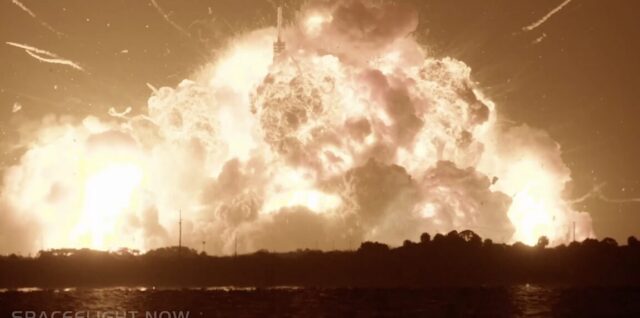
Last week’s explosion of a New Glenn rocket at Cape Canaveral, Florida, was clearly a setback for Blue Origin and NASA, but it was a learning experience for safety officials looking to open up the spaceport to hundreds more launches per year. The launch base on Florida’s Space Coast is gearing up for a flurry of new arrivals. SpaceX is building multiple launch pads for its super-heavy Starship rocket, which will operate within a few miles of launch pads operated by SpaceX rivals Blue Origin and United Launch Alliance. Two other companies, Stoke Space and Relativity Space, are also developing Continue ReadingSafety officials finally have a good idea of what a big rocket explosion can do

Rocket Report: Blue Origin explosion still making headlines; Impulse raises money

Welcome to Edition 8.44 of the Rocket Report! The news this week is decidedly weighted in favor of heavy-lift rockets, largely due to the fallout from last Thursday’s explosion of Blue Origin’s New Glenn on its launch pad in Florida. Blue Origin aims to resume launches at the badly damaged launch facility by the end of the year, but there’s good reason to be skeptical of this timeline. With New Glenn grounded, will Blue Origin founder Jeff Bezos approach Elon Musk’s SpaceX to launch his Blue Moon lander to the lunar south pole? It sure sounds like NASA is pushing Continue ReadingRocket Report: Blue Origin explosion still making headlines; Impulse raises money

Invasive caiman may pose new challenges for Everglades restoration

In the canals, wetlands and marshes of the Florida Everglades, the spectacled caiman has quietly expanded its foothold, threatening an already-vulnerable ecosystem. A new University of Florida study published in Frontiers in Amphibian and Reptile Science synthesizes more than 70 years of research on the invasive species native to Central and South America that has firmly established itself across the most vulnerable part of the Sunshine State—the Florida Everglades.

June 5, 1819: The birth of John C. Adams

On June 5, 1819, British mathematician and astronomer John C. Adams was born in Cornwall. The first to predict the existence of Neptune, he wrote in his journal on July 3, 1841: “Formed a design in the beginning of this week of investigating, as soon as possible after taking my degree, the irregularities in theContinue reading “June 5, 1819: The birth of John C. Adams” The post June 5, 1819: The birth of John C. Continue ReadingJune 5, 1819: The birth of John C. Adams

Prescribed burns are lit in Australia’s Northern Territory to minimize the severity of fires later in the season

In May and June of most years, NASA satellites typically begin to detect large numbers of wildland fires throughout the Top End and Arnhem Land regions of Australia’s Northern Territory. On some days, especially in the afternoon, the blazes can resemble sizable wildfires in satellite imagery, spreading widely and producing expansive smoke plumes.

From forest to front door: Understanding how wildfire spreads through communities

As California’s population boomed—from 10 million in 1950 to over 40 million today—the number of people living in fire-prone areas multiplied. Over the decades, millions of new homes and commercial buildings sprang up to accommodate the needs of the state’s growing population, and many of those structures stand in areas prone to wildfires.